Surprising fact: Some product ads claim one bottle equals hundreds of apples, but that math misleads many buyers in Malaysia.
Scientific tests show different mechanisms at work. An eight-week intake raised superoxide dismutase (SOD) by 39% and cut TBARS by 43%. Those results point to a real antioxidant effect, yet fruit and molecules act in different ways.
The article explains why marketers use catchy comparisons and why concentrations measured in ppb matter more than flashy slogans. Readers will learn how to read a product spec, compare price and product features, and weigh clear health benefits against hype.
For local support, Wellness Group can help compare models and price. Contact via WhatsApp +60123822655 during business hours: Monday–Friday 9:30 am–6:30 pm; Saturday–Sunday 10 am–5 pm.
Key Takeaways
- Clever apple math can mislead; mechanisms differ between fruit nutrients and molecular action.
- Measured concentration (ppb) and product specs matter more than equivalency claims.
- Clinical markers showed improved antioxidant status after weeks of intake.
- Evaluate price, content, and product claims before buying.
- Balance any supplement with whole foods for broader nutrition.
- Wellness Group in Malaysia offers local advice and model comparisons.
What readers in Malaysia want to know right now about hydrogen water vs apples
People in Malaysia often spot striking fruit comparisons and ask whether those numbers hold up. The quick answer: such claims simplify two very different routes to support the body.
Apples deliver fiber, vitamins, and polyphenols that help digestion and fullness. Bottled hydrogen may affect antioxidant markers in the body, but it cannot replace whole-food nutrients.
Quick takeaway on the antioxidant “equivalency” claim
Don’t treat a bottle as a stack of fruit. Viral graphics that list “hundreds” of fruits ignore how antioxidants act and how the body uses nutrients.
- Hydrogen supports antioxidant status in a specific way; apples and bananas support overall health through vitamins and fiber.
- Claims like “516 apples” or “756 bananas” are misleading; they compare different biological actions.
- Compare product specs and price, and watch short videos with a critical eye—check concentration figures and lab data before you buy.
- For product questions and local advice, Wellness Group can discuss options and budget on WhatsApp at +60123822655 during business hours.
Bottom line: enjoy fruit for nutrition and consider hydrogen as an optional complement, not a substitute. Later sections explain timing, device care, and what specs to view when choosing a product.
1.5l of hydrogen water is equivelant to how many apples?
When ad copy lists dozens or hundreds of produce equivalents, readers should pause and check the method behind the math. Specific pages promote lines like “1.5L equals 516 apples” or even “700 bananas”, but those numbers often mix different measures.
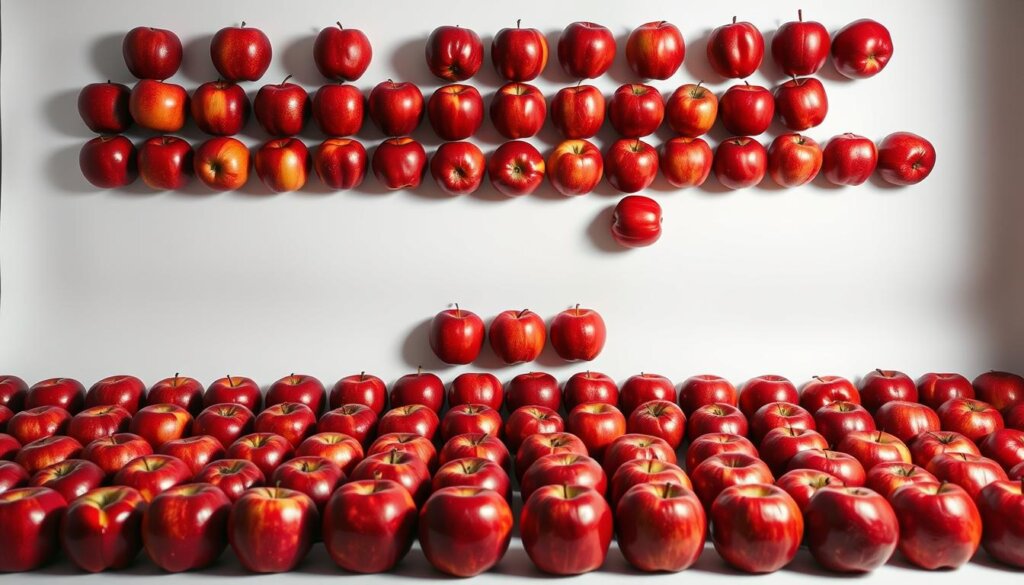
What marketers claim: “516 apples,” “500 apples,” or even “700 bananas”
Marketers use big tallies to make a product stand out. A slogan that says 516 apples sounds impressive and spreads quickly.
Why this comparison is misleading according to up-to-date, fact-checked analysis
The comparison treats dissimilar things as equal. Fruit brings fiber, vitamins and polyphenols. A functional drink delivers dissolved molecules that act on selective radicals and signaling pathways.
Apples vs hydrogen water: different pathways, different benefits
Eating fruit supports digestion, satiety and nutrient status. By contrast, the beverage may influence markers in tissue when dose and device performance are right.
| Feature | Fruit (apples/bananas/carrots) | Functional drink |
|---|---|---|
| Main content | Fiber, vitamins, polyphenols | Dissolved molecules that target radicals |
| Primary effects | Nutrition, fullness, metabolism | Selective antioxidant signaling |
| What to check | Freshness, variety, price per kg | Concentration, device specs, testing |
Practical tip: Stop at the slogan and read the fine print. Ask what was measured and whether peer-reviewed data support the claim.
For local clarifications or to discuss options and price, WhatsApp Wellness Group at +60123822655. Business hours: Mon–Fri 9:30 am–6:30 pm; Sat–Sun 10 am–5 pm.
How hydrogen-rich water actually works compared to fruit antioxidants
How a tiny dissolved molecule reaches tissue helps explain why its role differs from that of fruit nutrients. Hydrogen-rich water delivers a small, mobile agent that can diffuse into organs and cells, while fruit antioxidants travel through digestion and absorption before they act.
Delivery to cells and organs vs absorption of vitamins, minerals, fiber
Hydrogen moves quickly across membranes, reaching tissues in minutes. Fruit compounds need breakdown, then absorption, so timing and targets vary.
Evidence snapshot: enzyme changes and reduced oxidative damage
An eight-week intake raised SOD activity by 39% and lowered TBARS by 43%, suggesting stronger endogenous antioxidant strength and less oxidative damage. Those markers show measurable effects beyond marketing slogans.
Concentration matters: typical outputs and real dosing
Many devices aim for about 1000–1200 ppb after a generation cycle. Claims of 6000 ppb exist, but buyers should compare verifiable outputs and how a product keeps levels stable.
Free radicals, oxidative stress, and what antioxidant power really means
Neutralizing free radicals depends on route, dose, and persistence. Regular consumption such as drinking 1.5 daily may show cumulative benefits if device output and storage preserve dissolved content.
- Solubility and diffusion explain why retention, container choice, and timing after generation matter.
- Evaluate measurable markers (SOD, TBARS) instead of fruit-equivalency claims.
- For personalized guidance in Malaysia, contact Wellness Group on WhatsApp +60123822655. Business hours: Mon–Fri 9:30 am–6:30 pm; Sat–Sun 10 am–5 pm.
Choosing hydrogen water products and usage in Malaysia
Selecting the right generation method and form factor makes a big difference for daily use in Malaysia. Shoppers should match device type to routine, budget, and maintenance willingness.
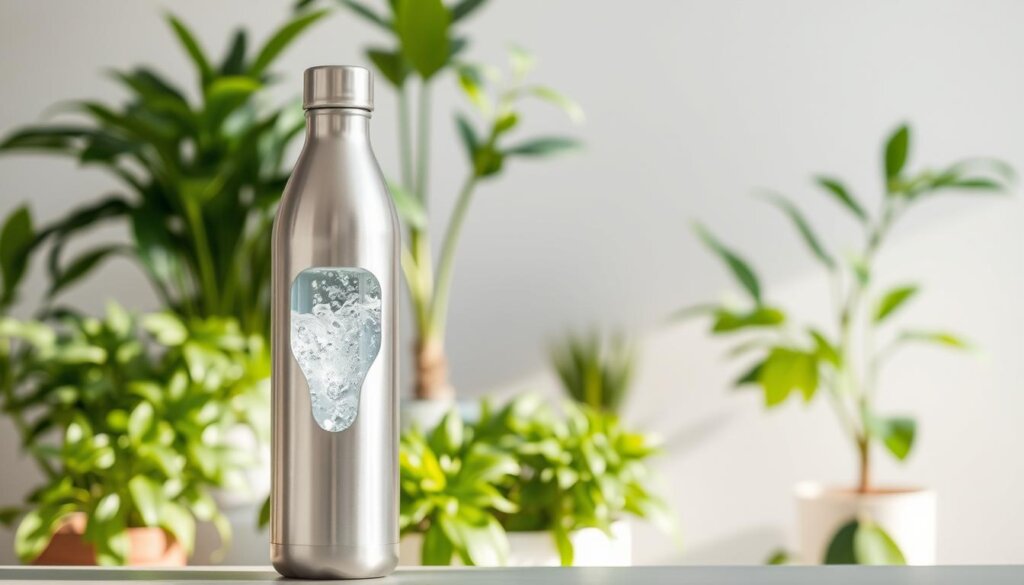
Portable bottle vs under-sink systems
Compare electrolysis type, chamber design, and power delivery. A portable unit offers on‑demand convenience. An under‑sink system gives steady supply but needs plumbing and pressure checks.
Water quality, pressure, and storage
Use filtered supply for best results. Incoming pressure affects output and how ppb holds in the bottle. Store sealed units to limit gas loss.
Marketing claims versus reality
Ask for measured results rather than trusting slogans like “6000 ppb.” Request independent test data, cycle time, and chamber materials. Verify safety certifications shown in a video or brochure.
Price, delivery, warranty and aftercare
- Compare price across products and what delivery includes.
- Confirm warranty terms, after-sales support, and recommended cleaning steps to protect coverage.
- Check charging method, battery life, and local power options before you buy.
Need help comparing models? View options and discuss benefits versus price with Wellness Group via they on WhatsApp at +60123822655. Business hours: Mon–Fri 9:30 am–6:30 pm; Sat–Sun 10 am–5 pm.
Smart consumption: when, how much, and what not to do
A few clear rules on timing and storage will protect dissolved content and avoid disappointment. Most guidance suggests splitting consumption across the day, often between meals, and aiming for 1–3 liters per day depending on comfort and routine.
Timing matters. Drink soon after generation because dissolved molecules dissipate with time and agitation. Avoid heating drinks; higher temperature lowers the product properties quickly.
Practical tips for daily use
- Plan drinking slots between meals so intake fits daily life and the body adapts easily.
- Store in sealed containers; sealed bottles slow loss but do not stop it.
- Compare price per use when choosing a device, tablets, or powder—convenience and repeatable output vary.
- Keep source quality high and follow manufacturer care to protect device performance and expected content.
- Balance with whole food like apples and carrots for fiber and vitamins; treat this as a complement, not a replacement.
For one-on-one tips, message Wellness Group on WhatsApp +60123822655 during business hours for local guidance on routines, travel options, and device upkeep.
Conclusion
Evidence and daily practicality beat headline claims. The fairest takeaway: both fruit and hydrogen-rich water offer value, yet comparing them as “516 apples” misleads. Measured changes like higher SOD and lower TBARS show real cellular benefits, but practical output and retention matter more than slogans.
Buyers should check verified ppb figures (typical cycles reach about 1000–1200 ppb), compare price, and view a short video or brochure that demonstrates actual product performance. Consider warranty and simple cleaning steps so a reliable water bottle or counter unit stays effective long term.
For final questions or a local comparison in Malaysia, message Wellness Group on WhatsApp +60123822655. Hours: Mon–Fri 9:30 am–6:30 pm; Sat–Sun 10 am–5 pm.
FAQ
Learn: 1.5l of Hydrogen Water is Equivalent to How Many Apples?
Claims that a single 1.5‑liter serving of hydrogen‑rich water matches the antioxidant content of hundreds of apples are misleading. Apples provide vitamins, fiber, and phytonutrients. Dissolved molecular hydrogen acts differently as a selective antioxidant. Comparing them as direct equivalents ignores distinct mechanisms, nutrients, and bioavailability.
What readers in Malaysia want to know right now about hydrogen water vs apples
Many want clear, practical advice: whether drinking hydrogen‑rich water adds measurable antioxidant benefits beyond a balanced diet, how to choose a reliable product locally, and whether price and performance justify a purchase. They also ask about safety, certification, and local supply like bottles or under‑sink units.
Quick takeaway on the antioxidant “equivalency” claim
The simple takeaway is: statements such as “516 apples” for one bottle are marketing shortcuts. Molecular hydrogen and apple antioxidants act on different targets. Equivalency numbers often come from extrapolated lab data and do not reflect real human metabolism or whole‑food benefits.
What marketers claim: “516 apples,” “500 apples,” or even “700 bananas”
Marketers sometimes translate antioxidant assay results into fruit counts to make an impact. Those figures typically derive from radical‑scavenging tests or conversions using unit assumptions. Consumers should treat such comparisons skeptically and ask for original lab reports and independent verification.
Why this comparison is misleading according to up-to-date, fact-checked analysis
Apples and hydrogen act via different biochemical pathways. Apples deliver fiber, vitamin C, and polyphenols that affect gut health and systemic nutrition. Molecular hydrogen selectively neutralizes some reactive oxygen species. Tests done in vitro or in animals don’t translate directly to human equivalence without clinical validation.
Apples vs hydrogen water: different pathways, different benefits
Apples support digestion, provide sustained micronutrients, and influence long‑term health markers. Hydrogen‑rich water may influence oxidative stress markers and cellular signaling. Both can fit into a healthy lifestyle, but neither replaces the other.
How hydrogen-rich water actually works compared to fruit antioxidants
Molecular hydrogen diffuses rapidly and can reach cellular compartments, where it may reduce specific reactive species and modulate signaling. Fruit antioxidants often act in the gut, bloodstream, and tissues via multiple compounds, contributing to nutrition and microbiome health.
Delivery to cells and organs vs absorption of vitamins, minerals, fiber
Dissolved gas reaches tissues quickly but does not provide calories or micronutrients. Fruits supply vitamins, minerals, and fiber that support digestion and long‑term nutrient status. Consumers should weigh immediate oxidative modulation against lasting nutritional contributions.
Evidence snapshot: SOD up 39% and TBARS down 43% after 8 weeks
Some clinical and pilot studies report improvements in oxidative stress markers—like increased superoxide dismutase (SOD) or reduced TBARS—after hydrogen‑rich water interventions. These findings are promising but vary by study design, dose, and population. Look for peer‑reviewed trials and sample sizes before drawing conclusions.
Concentration matters: dissolved hydrogen around 1000-1200 ppb and “drinking 1.5”
Reported benefits often depend on dissolved hydrogen concentration (measured in ppb). Typical effective ranges in research vary; some devices advertise up to 6000 ppb while practical, stable concentrations in bottled products commonly fall lower. Consumers should ask for independent ppb or ppm verification.
Free radicals, oxidative stress, and what “antioxidant power” really means
Antioxidant power is context dependent. Not all free radicals are harmful; some support immune signaling. Effective antioxidant strategies balance reduction of harmful oxidative stress without disrupting physiological signaling. Hydrogen’s selective action differs from broad‑spectrum antioxidants in foods.
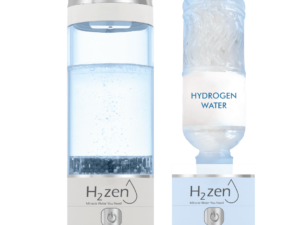
Hydrogen water bottle vs under-sink systems: type, power, charging, and cleaning
Portable bottles offer convenience and visible hydrogen generation but need regular charging and cleaning. Under‑sink systems provide continuous supply but require installation and plumbing. Evaluate build quality, chamber design, maintenance needs, and verified output when choosing.
Water quality, pressure, and storage: keep hydrogen from escaping
Dissolved gas escapes over time and with heat or agitation. Use airtight containers, cold storage, and consume soon after generation. Incoming water quality and pressure affect device performance, so use filtered municipal or bottled water per manufacturer guidelines.
Marketing claims vs product realities: ppm/ppb, chambers, and safety certifications
Check independent lab reports for ppm/ppb, ask about the hydrogen generation chamber material, and confirm safety certifications like CE or local approvals. Beware of inflated claims and request test certificates from accredited labs.
View, delivery, price, and warranty: what to ask a seller before you buy
Ask for verified hydrogen concentration tests, warranty details, return policy, expected lifespan, replacement parts, and local delivery options. Compare price against verified performance and after‑sales support.
Talk to Wellness Group: WhatsApp +60123822655 – Business hours Mon-Fri 9:30 am-6:30 pm, Sat-Sun 10 am-5 pm
For local Malaysian inquiries about devices, delivery, and warranties, contact the Wellness Group via the provided WhatsApp number during business hours. They can supply product specs, certification copies, and maintenance advice.
Recommended timing and daily consumption; why heating reduces hydrogen properties
Many manufacturers recommend drinking fresh, chilled hydrogen‑rich water several times daily. Heating or boiling dissipates gas and reduces potential benefits. Follow device guidelines for recommended daily volumes and timing relative to meals.
Balancing hydrogen water with real food like apples, carrots, and bananas
Hydrogen water can complement a diet rich in whole fruits and vegetables. It should not replace food sources of fiber, vitamins, and minerals. Consumers benefit most from combining hydration practices with a varied, nutrient‑dense diet.