Beetroot for Pregnancy: Safe Consumption Tips
What if one simple, colorful vegetable could be a secret weapon for a smoother, healthier journey to motherhood?
Welcome, expectant mothers! This guide explores how this vibrant root can be a fantastic addition to a prenatal nutrition plan. It is packed with essential vitamins and minerals that support both maternal well-being and fetal development.
This article provides a complete look at the impressive benefits. It also shares practical tips, tasty recipes, and important safety notes. Readers will learn how to enjoy this vegetable safely by understanding proper portions and preparation.
The goal is to combine solid nutritional science with easy kitchen advice. This makes it simple for moms-to-be to add this powerful food to their daily meals.
This supportive resource aims to empower women with knowledge for making informed dietary choices. For personalized nutritional guidance tailored to individual needs, expert advice from the Wellness Group is available.
Key Takeaways
- Beetroot is a nutritional powerhouse beneficial for prenatal health.
- It supports both maternal wellness and fetal development.
- Understanding proper portion sizes is key to safe consumption.
- This guide offers practical tips and delicious recipe ideas.
- Safety considerations are discussed to ensure well-being.
- The information is evidence-based and easy to implement.
- Expert guidance is available for personalized advice.
Introduction: Embracing Beetroot for Pregnancy
Expectant mothers might discover a surprising nutritional ally in this earthy-sweet vegetable. Known scientifically as Beta vulgaris, this root comes in stunning colors beyond the familiar deep red.
| Variety | Color | Flavor Profile | Best Uses |
|---|---|---|---|
| Red Ace | Deep Magenta | Sweet, Earthy | Juicing, Roasting |
| Golden | Sunny Yellow | Mild, Sweet | Salads, Pickling |
| Chioggia | Pink & White Rings | Extra Sweet | Raw Preparations |
The vegetable’s unique taste complements both savory and sweet dishes beautifully. It shines in fresh salads, blended smoothies, and even baked goods.
“The nutritional profile of this root makes it particularly valuable during the childbearing months, offering a natural boost to maternal wellness.”
Incorporating this food into a prenatal diet requires no special skills. Simple roasting or steaming unlocks its full potential. Even raw grating works wonderfully in various recipes.
These essential nutrients work synergistically to support overall maternal health. The benefits extend throughout all stages of gestation.
Many women find this colorful addition makes meal planning more enjoyable. It brings both visual appeal and substantial nourishment to the table.
Nutritional Powerhouse of Beets
This earthy root delivers concentrated nutrition in every bite, offering substantial benefits for expectant mothers. A single cup provides only 70 calories while packing an impressive array of essential nutrients. With 87% water content, it supports hydration while delivering quality nourishment.
The vegetable’s composition makes it an efficient source of vital compounds. Each serving contains fiber, carbohydrates, and protein in balanced proportions.
Key Vitamins and Minerals
One cup supplies 20% of the recommended folate intake, a critical B vitamin. It also provides 14% of manganese needs and 8% of potassium requirements.
Vitamin C contributes 6% of daily values in each cup. These micronutrients work together to support maternal wellness and fetal growth.
Powerful antioxidants called betalains give the root its vibrant color. Nitrates and betaine compounds add to the overall health benefits.
Folate and Iron Benefits
Folate plays a crucial role in fetal brain and spinal cord development. This makes the vegetable an excellent plant-based source for this essential nutrient.
The iron content helps prevent anemia and fatigue during gestation. Vegetarians and vegans find it particularly valuable for maintaining adequate iron levels.
These combined nutrients make each cup a smart addition to prenatal nutrition plans. The balanced profile supports both immediate and long-term wellness goals.
Health Benefits for Pregnant Women
Mothers-to-be can tap into specific wellness perks by including this colorful food in their meals. The impressive nutrient profile offers targeted support for common concerns during this special time.
These advantages are easy to access and contribute significantly to both comfort and fetal growth.
Improved Digestion and Regularity
Hormonal changes can slow down the digestive system. The high fiber content—nearly 4 grams per cup—helps combat this sluggishness.
This promotes healthy bowel movements and wards off constipation. Better digestion is a key health benefit for pregnant women.
Boosting Iron Levels and Blood Flow
The vegetable supports red blood cell production, helping prevent iron deficiency. This reduces fatigue, a common issue during pregnancy.
Natural nitrates convert to nitric oxide in the body. This compound relaxes blood vessels, enhancing blood flow.
Improved circulation ensures the baby receives ample oxygen and nutrients. This supports optimal fetal development and may help prevent growth restrictions.
These combined benefits make it a valuable addition to a prenatal diet. Expectant mothers can enjoy these advantages through simple, moderate consumption.
Understanding Beetroot for Pregnancy
The connection between dietary choices and gestational wellness has led many to explore the advantages of incorporating specific nutrient-rich vegetables. This vibrant root has gained attention for its ability to support maternal health naturally.
Understanding the relationship involves recognizing both the substantial benefits beetroot offers and practical safety considerations. This knowledge helps expectant mothers make informed decisions during this special time.
The advantages extend well beyond basic nourishment. They include support for common concerns like digestive regularity, iron levels, and blood pressure management.
While generally safe, proper consumption guidelines ensure mothers maximize advantages while avoiding potential issues. Moderation and preparation methods play key roles in safety.
This vegetable fits perfectly within a balanced prenatal eating plan. It complements other nutrient-dense foods rather than serving as a complete solution.
The ideal time to begin incorporating it is whenever mothers feel comfortable. Basic knowledge about portions and frequency supports beneficial consumption throughout gestation.
Safe Consumption Tips During Pregnancy
Safety guidelines for consuming this vibrant vegetable focus on two key aspects: quantity and preparation. Understanding these simple practices helps expectant mothers enjoy the nutritional advantages while maintaining peace of mind.
Portion Control and Moderation
Moderation serves as the golden rule during this special time. Most healthcare providers consider 1-2 small roots or 1 cup of juice per day a safe intake amount.
While no official standardized recommendation exists, practicing portion control ensures mothers receive benefits without overconsumption. Several servings per week provide excellent nutritional value without rigid scheduling.
| Trimester | Recommended Form | Suggested Frequency | Special Considerations |
|---|---|---|---|
| First | Cooked or Raw | 3-4 times weekly | Monitor for digestive comfort |
| Second | Primarily Cooked | 4-5 times weekly | Focus on iron absorption |
| Third | Cooked Preferred | 2-3 times weekly | Limit juice; consult provider |
Proper Preparation Techniques
Thorough scrubbing removes dirt and potential contaminants, which is crucial during gestation. Cutting green stalks while leaving about an inch attached prevents colorful “bleeding” during cooking.
Some doctors advise limiting juice in the final trimester due to nitrate concentrations. Listening to one’s body and adjusting based on personal tolerance ensures comfortable incorporation of these foods.
Creative Culinary Uses for Beetroot
Discovering new preparation methods can make this nutritious vegetable a regular part of prenatal nutrition. Simple techniques transform the earthy root into appealing dishes that deliver maximum benefits.
These creative approaches suit various skill levels and time constraints. Expectant mothers can choose methods that fit their schedules and preferences.
Roasting and Microwaving Methods
Roasting brings out natural sweetness and creates tender results. Preheat the oven to 400°F and place scrubbed roots in foil or a baking dish.
Bake for 45 to 90 minutes depending on quantity. The skins peel off easily after cooking.
Microwaving offers a quick alternative for busy schedules. Place two to three small roots in a microwave-safe dish with water.
Heat on high for 8 to 15 minutes until soft. This method preserves nutrients while saving time.
Smoothies and Juices Ideas
Blending creates nutrient-packed beverages that are easy to digest. Combine ½ cup chopped roots with ginger, orange juice, and frozen fruits.
Process in a high-powered blender until smooth and creamy. The result is a refreshing drink full of vitamins.
Juicing provides concentrated nutrition in liquid form. Process a small root with apples or oranges for a tasty beverage.
Mixing fresh juice with 100% fruit juice creates a naturally sweet option. These drinks offer hydration along with nutritional benefits.
| Preparation Method | Time Required | Equipment Needed | Best For |
|---|---|---|---|
| Roasting | 45-90 minutes | Oven, baking dish | Meal prep, side dishes |
| Microwaving | 8-15 minutes | Microwave-safe dish | Quick meals, busy days |
| Smoothies | 5-10 minutes | Blender | Breakfast, snacks |
| Juicing | 5-10 minutes | Juicer | Hydration, quick nutrition |
Experimenting with different ways of preparation helps find favorites. Each method offers unique advantages for incorporating this vegetable into daily meals.
Balancing Beet Consumption with Your Diet
The art of prenatal nutrition lies in creating a balanced mosaic of nutrient-rich selections that work together synergistically. This vibrant root vegetable serves as one colorful piece in this nutritional picture.
According to ACOG guidelines, expectant mothers need approximately 340 extra calories daily during the second trimester. This earthy vegetable fits well within these increased energy needs as a nutrient-dense, lower-calorie option.
| Vegetable | Natural Sugar (per 100g) | Key Nutrients | Pregnancy Benefits |
|---|---|---|---|
| Beetroot | 6.8g | Folate, Iron, Potassium | Blood health, Digestion |
| Carrots | 4.7g | Vitamin A, Fiber | Vision, Immunity |
| Broccoli | 1.7g | Vitamin C, Calcium | Bone health, Antioxidants |
| Spinach | 0.4g | Iron, Folate, Magnesium | Anemia prevention |
While this root contains more natural sugar than many vegetables, moderation ensures its benefits without excess. Variety prevents over-reliance on any single food source.
A practical strategy involves filling half your plate with fresh fruits and vegetables at mealtimes. This approach supports healthy weight gain while providing comprehensive nutrient coverage.
This nutritious addition complements other whole foods beautifully. Balanced consumption creates an optimal foundation for supporting both maternal wellness and fetal development throughout gestation.
Incorporating Beetroot into a Healthy Pregnancy Diet
Making this vibrant root a regular part of meals doesn’t require major dietary changes. Expectant mothers can enjoy its benefits through simple, creative additions to familiar dishes.
Delicious Salads and Side Dishes
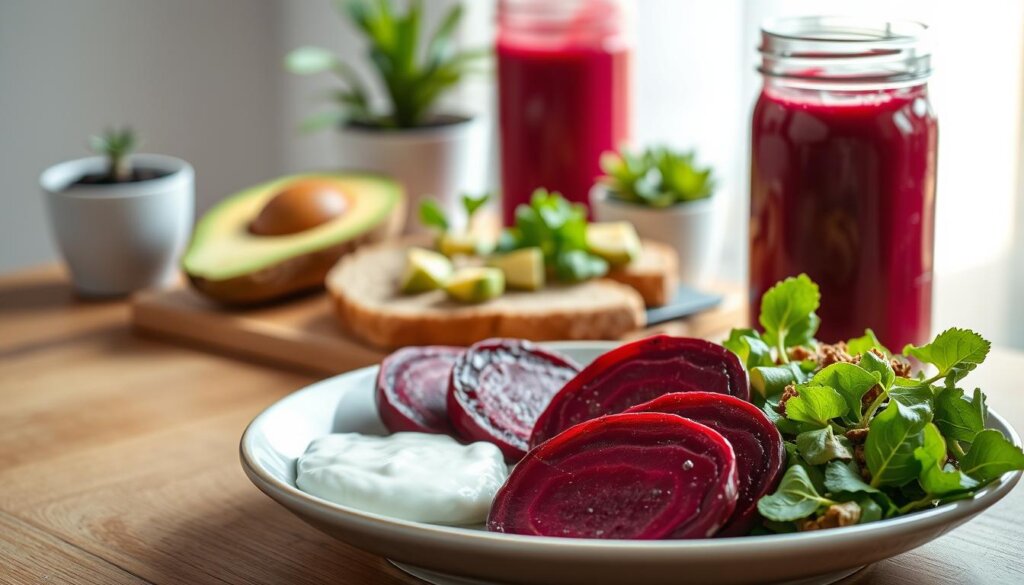
Raw grated beetroot adds crunch and color to green salads and grain bowls. Steamed or roasted versions create vibrant side dishes that complement proteins perfectly.
For busy schedules, canned or precooked options offer convenience. Always rinse well or choose low-sodium varieties to manage salt intake during this special time.
Mixing Beetroot in Everyday Meals
Creative mixing ways include blending cooked roots into hummus for a pink, nutrient-rich dip. Puree can be added to muffins or pancakes for hidden vegetable nutrition.
Stir-fries and soups benefit from the sweet earthiness of this vegetable. Pickled versions make satisfying crunchy snacks that help with cravings.
These simple additions make it easy to maintain a healthy pregnancy diet. The versatility ensures regular enjoyment without complicated recipes or extensive planning.
Potential Risks and Side Effects
Knowledge of possible reactions helps expectant mothers distinguish between normal responses and those requiring medical attention. While generally safe, understanding these side effects ensures confident consumption.
Beeturia and Urine Color Changes
Some women notice pink or red coloration in their urine after eating this vegetable. This harmless condition, called beeturia, affects about 14% of people.
The color change occurs due to natural pigments and typically resolves within a day or two. While usually not concerning, mentioning it to healthcare providers is wise since it can sometimes indicate iron deficiency.
Oxalate Concerns and Kidney Stones
This root contains oxalates, compounds also found in spinach, nuts, and chocolate. High oxalate levels may contribute to kidney stone formation in susceptible individuals.
Most women experience no issues with moderate consumption. Those with a history of kidney risks should discuss intake with their doctor.
| Normal Reaction | When to Consult Doctor | Management Approach |
|---|---|---|
| Temporary pink urine | Color changes persist beyond 48 hours | Monitor and maintain hydration |
| No digestive discomfort | Persistent stomach issues | Adjust portion sizes |
| Normal bowel movements | Significant digestive changes | Balance with other vegetables |
Understanding these potential side effects doesn’t mean avoiding the vegetable entirely. The risks are minimal for most women during pregnancy when consumed moderately.
“Awareness of normal bodily responses empowers women to make informed choices without unnecessary worry.”
Open communication with healthcare providers ensures any concerns are addressed promptly. This allows mothers to enjoy nutritional benefits while maintaining peace of mind.
Research Insights on Beetroot and Preeclampsia
Investigations into natural approaches for maintaining healthy blood pressure levels during gestation have yielded interesting findings. Preeclampsia, a serious condition marked by high blood pressure, affects both maternal and fetal wellness.
Researchers have explored whether dietary nitrates from vegetable juice might help manage pressure readings. A 2018 human study examined this potential benefit specifically for expectant mothers.
Animal Studies vs. Human Research
The 2018 investigation found that juice supplementation alone didn’t significantly lower blood pressure measurements. However, a 2020 mouse study showed more encouraging results.
Pregnant rodents receiving the vegetable supplement demonstrated improved vascular function. Their pressure levels were lower compared to control groups.
This distinction between animal and human research is important. Mouse studies provide valuable preliminary insights, but human trials are necessary for confirmation.
While definitive proof about preeclampsia prevention remains under study, the vegetable’s nutritional value makes it a worthwhile addition. Ongoing research continues to explore its therapeutic potential during this special time.
Expert Guidance from Wellness Group
Navigating dietary choices becomes easier with expert guidance tailored to individual needs. The Wellness Group offers specialized support for women during this important time in their lives.
Contact Information and Business Hours
Pregnant women can access personalized consultations with knowledgeable professionals. The team understands unique nutritional requirements and provides evidence-based recommendations.
Contact is convenient through WhatsApp at +60123822655. This allows questions about diet or wellness concerns to be addressed promptly.
Business hours accommodate various schedules throughout the week. Support is available Monday to Friday from 9:30 am to 6:30 pm.
Saturday hours run from 10 am to 5 pm, while Sunday is reserved as a closed day. These accessible times provide ample opportunity for scheduling consultations.
Women seeking professional support beyond general information will find valuable resources. The Wellness Group helps create personalized strategies for optimal maternal health throughout pregnancy.
Easy Beetroot Recipes for Pregnant Women
Expectant mothers often seek straightforward culinary ideas that deliver maximum nourishment with minimal effort. These simple preparations make it easy to incorporate this vibrant vegetable into daily meals.

Roasted Beetroot Ideas
Roasting brings out the natural sweetness while softening the earthy flavor. This makes it more appealing during times of taste sensitivity.
Try tossing cubed roots with olive oil and herbs before baking. Roasted beet and goat cheese salad makes a satisfying lunch option.
For a healthy snack, cut them into wedges as an alternative to french fries. Batch preparation at the week’s start ensures ready-to-use ingredients for busy days.
Refreshing Juice Recipes
Fresh juices deliver concentrated nutrients in an easy-to-consume form. The recipes can be adjusted based on personal preferences.
Classic combinations include beet-apple-carrot or beet-orange-ginger blends. For something different, try a beet-berry antioxidant mix or beet-cucumber-mint cooler.
Start with small amounts and adjust flavors to suit changing tastes. Finding enjoyable preparations increases the likelihood of regular consumption.
| Preparation Method | Time Investment | Nutrition Retention | Best For |
|---|---|---|---|
| Roasting | 45-60 minutes | High | Meal preparation |
| Juicing | 5-10 minutes | Very High | Quick nutrition |
| Steaming | 20-30 minutes | Medium-High | Side dishes |
| Raw grating | 5 minutes | Maximum | Salads, toppings |
Experiment with these ideas as starting points. The goal is discovering preparations that bring both enjoyment and nutritional benefits to the prenatal diet.
Supplementary Tips for a Healthy Pregnancy Diet
Building a comprehensive nutritional foundation involves more than just focusing on individual superfoods. A balanced approach ensures mothers receive all essential nutrients for optimal wellness.
Variety remains crucial in any prenatal eating plan. Expectant women should include diverse food groups to cover nutritional needs.
| Food Category | Daily Servings | Key Benefits | Examples |
|---|---|---|---|
| Fruits & Vegetables | 5-7 servings | Vitamins, fiber, antioxidants | Leafy greens, berries, citrus |
| Whole Grains | 6-8 servings | Energy, B vitamins, fiber | Brown rice, oats, whole wheat |
| Lean Proteins | 2-3 servings | Growth, repair, iron | Chicken, fish, legumes |
| Healthy Fats | 2-3 servings | Brain development, hormones | Avocado, nuts, olive oil |
High-quality prenatal vitamins provide essential folate that’s difficult to obtain from food alone. These supplements complement dietary intake beautifully.
Hydration offers multiple benefits throughout gestation. Adequate water intake supports blood volume and nutrient transport to the growing baby.
Smaller, frequent meals help manage nausea and maintain energy levels. This approach accommodates reduced stomach capacity as the baby grows.
“Mindful eating practices help women tune into their body’s natural hunger signals, supporting appropriate weight gain.”
Each trimester brings unique nutritional needs. Flexibility in dietary approaches ensures mothers meet changing requirements while maintaining focus on nutrient-dense foods.
These strategies create a solid foundation for a healthy pregnancy. They support both maternal wellness and fetal development throughout the entire journey.
Conclusion
Optimal maternal nutrition represents a partnership between evidence-based food choices and personalized professional guidance.
The vibrant root vegetable discussed offers impressive health benefits for expectant mothers. It provides essential nutrients like folate and iron that support both maternal wellness and fetal development.
Safe consumption involves moderation and proper preparation. Most women can enjoy 1-2 small portions daily without concerns.
This nutritious addition works beautifully in various preparations. Roasting, juicing, and adding to salads make incorporation easy throughout each trimester.
While powerful, it functions best within a balanced diet rather than as a standalone solution. Individual needs vary, making professional consultation valuable.
For personalized guidance on incorporating this and other beneficial foods, contact Wellness Group. Their experts help create optimal nutritional strategies for this special time.
FAQ
Is it safe to eat beetroot during pregnancy?
Yes, it is generally safe to consume this root vegetable during pregnancy. It is packed with essential nutrients like folate and iron, which support a healthy pregnancy. As with any food, it’s best enjoyed in moderation as part of a balanced diet.
What are the main health benefits for expecting mothers?
The benefits are significant. This vegetable is an excellent source of folate, which is crucial for preventing neural tube defects. Its high iron content helps combat fatigue and supports healthy blood flow. The fiber aids digestion, helping to prevent common issues like constipation.
Can eating beets affect blood pressure?
Yes, it can have a positive effect. Beets contain natural nitrates that the body converts to nitric oxide, a compound that helps relax and widen blood vessels. This process can support healthy blood pressure levels, which is vital during pregnancy.
Are there any side effects to be aware of?
Some people may experience a harmless condition called beeturia, where urine turns pink or red. For those prone to kidney stones, the oxalates in beets might be a concern. Introducing them slowly and drinking plenty of water can help manage any potential risks.
What is the best way to prepare beets for my diet?
They are incredibly versatile! Roasting them brings out their natural sweetness, making a great side dish. They can also be blended into nutritious smoothies or juiced. Always wash them thoroughly and cook them properly to ensure safety.
How much beetroot is safe to eat per day?
A moderate intake is key. About one cup of cooked beets or a small glass of juice is a good starting point. It’s important to balance this food with other fruits and vegetables to ensure a varied intake of nutrients throughout the trimesters.

Khloe Tan
Khloe Tan is a Certified Nutritionist, Corporate Wellness Trainer, and Holistic Health Specialist with over 15 years of experience in the health and wellness industry. She has delivered more than 100 talks nationwide, inspiring and educating diverse audiences on nutrition, lifestyle, and sustainable wellness. Her work has positively impacted over 3,000 lives, and she continues to champion holistic approaches to well-being in both corporate and personal settings.