Surprising fact: a small human trial found measurable shifts in oxidative markers after consuming extra molecular hydrogen, yet most bottled brands sell very different products.
Wellness Group helps Malaysians sort this out. The classic brand is vapor-distilled and has added electrolytes like calcium chloride and potassium bicarbonate for taste. A separate alkaline variant is sold at pH 9.5.
By contrast, another format uses added molecular gas to boost antioxidant claims. That product often arrives in cans, pouches, tablets, or home machines. Concentrations vary, and clinical evidence remains limited.
Why this matters: taste, packaging, timing and price affect daily drinking choices in Malaysia. Readers will get clear points to weigh and can contact Wellness Group via WhatsApp at +60123822655 during business hours for local guidance.
Key Takeaways
- Vapor-distilled bottles add electrolytes for taste; alkaline options exist.
- Products with added molecular hydrogen use special packaging to retain gas.
- Small trials suggest potential benefits, but evidence is limited and mixed.
- Packaging, pH, and price are practical buying factors for Malaysians.
- Contact Wellness Group on WhatsApp for tailored local advice.
Smartwater vs Hydrogen Water: What They Are and How They’re Made
Consumers often lump bottled options together, yet their production methods diverge sharply.
Smartwater in brief: vapor-distilled water with added electrolytes
Smart branded bottles start with distillation that strips most dissolved content. Makers then add a small mix of electrolytes — calcium, magnesium and potassium compounds — to refine taste.
The brand belongs to Coca‑Cola’s Energy Brands and offers an alkaline line near pH 9.5. Source feeds may begin as tap or spring before the vapor process yields a consistent profile.
Hydrogen water explained: pure water infused with extra hydrogen molecules
Hydrogen-infused options dissolve H2 gas into purified liquid so free molecules float in solution rather than changing oxygen bonds.
Producers often use cans, multilayer pouches, tablets or home machines to retain the tiny gas and limit loss during shelf life.
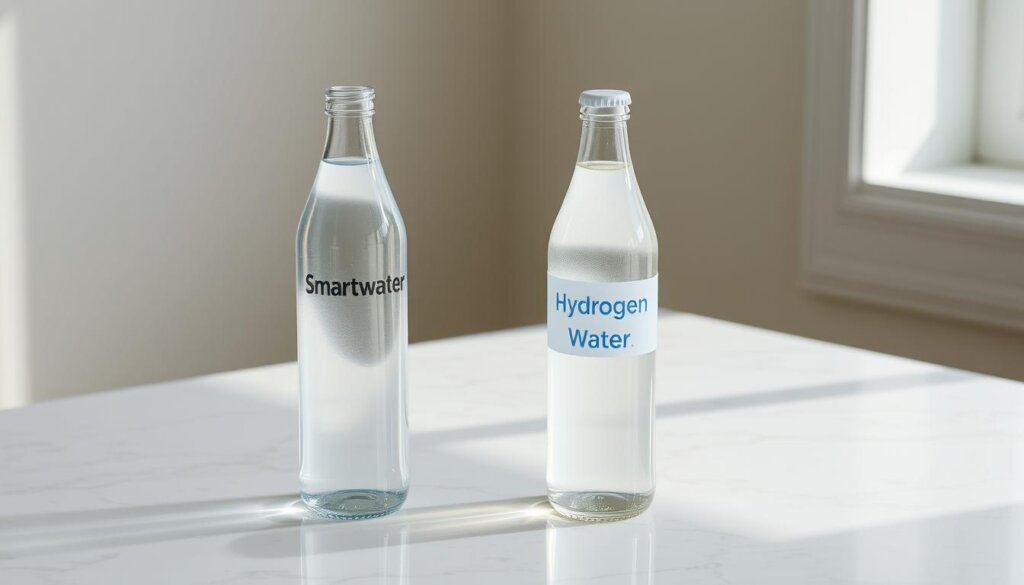
“Packaging and process shape both taste and price; choose by preference and use.”
- Production: distillation plus added electrolytes vs gas infusion.
- Packaging: standard bottles for the former; cans or pouches for the latter.
- Cost note: infused packs often carry a premium.
For local guidance in Malaysia, message Wellness Group on WhatsApp at +60123822655 (Mon–Fri 9:30 am–6:30 pm; Sat–Sun 10 am–5 pm).
Is Smart Water Hydrogen Water?
Short answer: No — the two are made for different aims and use distinct production steps.
Smartwater centers on vapor distillation followed by added electrolytes to shape taste. That process removes most impurities and then restores a balanced mineral profile.
By contrast, hydrogen water involves an infusion step that dissolves extra H2 molecules into the liquid. That step targets dissolved gas content rather than flavor minerals.
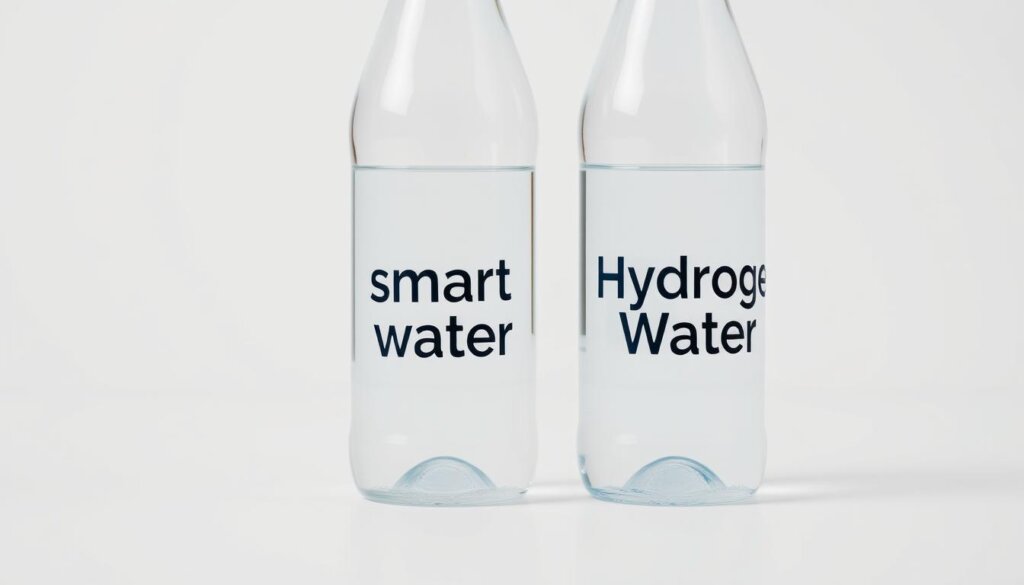
- They are not the same: one focuses on distilled clarity with minerals; the other on dissolved gas as the key feature.
- If a label does not state dissolved hydrogen content or show packaging designed to hold gas, it is not hydrogen water.
- Packaging and storage differ because tiny molecules and gas retention affect shelf life and handling.
“Read labels carefully: ‘electrolytes added for taste’ does not mean added molecular hydrogen.”
For quick, local guidance in Malaysia, message Wellness Group on WhatsApp at +60123822655 during open hours for a side‑by‑side recommendation that fits routine and budget.
Purported Benefits, Research, and Real-World Use
Researchers have run short trials to see if enriched beverages shift blood markers, lipids, or fatigue.
Antioxidant findings: Small clinical work shows mixed results. One eight‑week trial in people receiving radiation for liver cancer reported lower hydroperoxide and preserved antioxidant activity after 1.5–2.0 L per day. By contrast, a four‑week study in healthy adults drinking 600 ml/day found no change in oxidative stress.
Athletic effects: Trials in athletes suggest potential gains. Soccer players who drank about 1.5 L/day had lower blood lactate and less perceived fatigue. Another study in cyclists observed improved sprint power after 2.0 L/day. For practical notes on training use, see the article on hydrogen water for muscle soreness.
Metabolic and expert view
A 10‑week pilot in adults with metabolic features reported lower LDL and total cholesterol, higher HDL, greater antioxidant activity, and reduced TNF‑α after roughly 0.9–1.0 L/day. Experts caution that samples are small, doses differ, and concentrations in a product vary widely.
“Evidence is intriguing but preliminary; consistency across studies is limited.”
- Early research suggests possible benefits for oxidative stress and lipids in specific groups.
- Not all trials show effects; outcomes depend on dose, duration, and participant profile.
- Because dissolved gas escapes, packaging and timing matter for real‑world results.
Safety and shopping tips: The product is generally recognized as safe, yet no optimal daily intake is set. Choose non‑permeable containers and drink soon after opening. For evidence‑informed shopping help in Malaysia, contact Wellness Group on WhatsApp at +60123822655 (Mon–Fri 9:30 am–6:30 pm; Sat–Sun 10 am–5 pm).
Choosing Your Drinking Water in Malaysia: Taste, pH, Price, and Purpose
Choosing the right daily drink often comes down to taste, budget, and how the bottle fits a routine.
Electrolytes, alkaline options, and everyday hydration needs
For neutral taste and predictable minerals, many pick Smartwater for its vapor‑distilled profile with added calcium, magnesium and potassium. An alkaline line sits near pH 9.5 for those who prefer a higher pH.
Format matters. Infused formats arrive in cans or pouches, or via tablets and home devices. That packaging raises the price: a 30‑pack of 8‑oz cans can cost around $90, so compare per‑liter cost before buying.
Look at mouthfeel and labels. Minerals change flavor more than most expect. If portability is key, choose a size and seal that matches an active day.
Need guidance or a store recommendation?
Wellness Group can recommend local stores, compare price and format, and discuss home devices. WhatsApp Wellness Group at +60123822655 (Mon–Fri 9:30 am–6:30 pm; Sat–Sun 10 am–5 pm) for tailored advice.
“Match the product to purpose—taste, pH and packaging decide long‑term satisfaction.”
- Start with purpose: neutral sipping, pH preference, or trial of infused formats.
- Compare per‑liter price and store availability before committing.
- Consider home devices only if they fit routine and maintenance needs.
Conclusion
For most people, the right pick balances flavor, cost and realistic benefit claims.
Smart water bottles deliver a vapor‑distilled profile with added electrolytes like magnesium and potassium for taste. By contrast, hydrogen products add extra molecules and aim at specific research‑driven benefits for oxidative stress, metabolic markers and athlete performance.
Marketing can outpace evidence, so readers should weigh claimed benefits against packaging, mineral content and per‑day cost. Practical choices—bottled formats, material and how fast to consume—shape value for the body.
For a friendly recommendation or nearby retailers in Malaysia, WhatsApp Wellness Group at +60123822655 (Mon–Fri 9:30 am–6:30 pm; Sat–Sun 10 am–5 pm) for clear, local guidance on which bottle to pick today.
FAQ
Is Smartwater the same as hydrogen water?
No. Smartwater is vapor-distilled and has added electrolytes like calcium and magnesium for taste. Hydrogen-rich beverages contain extra molecular hydrogen dissolved into the liquid to deliver potential antioxidant effects. They are produced by different processes and marketed for different reasons.
How is Smartwater made compared with hydrogen-enriched drinks?
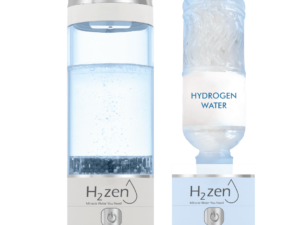
Smartwater undergoes distillation to remove impurities, then brands add trace minerals for flavor. Hydrogen drinks are typically infused with H2 gas or created with tablets that release gas, and some use sealed cans or pouches to retain dissolved molecules. Home generators also exist for consumers who want to make hydrogen-enhanced water at home.
Do hydrogen beverages offer proven health benefits?
Evidence is limited. Small studies suggest molecular hydrogen may reduce oxidative stress and slightly affect markers like inflammation or lactate after exercise, but larger, long-term trials are needed. Experts caution that results vary by concentration and study design.
Can athletes gain performance advantages from hydrogen-rich drinks?
Early trials report modest effects on fatigue and lactate in some athletes, but findings are inconsistent. Performance benefits depend on dose, timing, and sport. Many athletes still rely on proven strategies like hydration, electrolytes, and proper nutrition.
Are there safety concerns or side effects?
Hydrogen at the concentrations used in beverages appears safe for most people. Consumers should watch for added sugars, preservatives, or unregulated claims. People with medical conditions should consult a healthcare professional before trying new supplements or specialty drinks.
How should someone choose between distilled-plus-electrolyte drinks and hydrogen options?
Selection depends on goals. For everyday hydration and a clean taste, distilled-plus-mineral bottles are a practical choice. Those curious about potential antioxidant effects may try hydrogen products, keeping in mind limited evidence and higher price points. Consider pH, electrolyte content, price, and storage.
Are alkaline or mineral waters better than these options?
Alkaline and mineral waters offer higher pH or natural electrolytes like potassium and calcium, which can affect taste and mineral intake. They don’t provide molecular hydrogen unless specially infused. For most people, variety and overall fluid intake matter more than one specific label.
Where can people in Malaysia get guidance or buy these products?
Wellness Group Malaysia can help with product choices and store recommendations. Contact them on WhatsApp at +60123822655 (Mon–Fri 9:30 am–6:30 pm; Sat–Sun 10 am–5 pm) for advice on bottled, canned, or home-generation options.
Do packaging and storage affect hydrogen levels?
Yes. Hydrogen gas escapes easily, so sealed cans and pouches or freshly prepared home-generated drinks retain higher concentrations. Plastic bottles and long storage times reduce dissolved gas, lowering any potential effect.
Is price a reliable indicator of quality for these beverages?
Not always. Higher price may reflect branding, packaging, or niche production methods rather than proven benefits. Buyers should check ingredient lists, hydrogen concentration (if provided), and third-party testing when available.