Did you know a recent review screened 590 PubMed entries and found only about 25–30 human trials on hydrogen-rich water? That gap shows both promise and the need for care when interpreting early results. This short guide welcomes readers in Malaysia to a balanced, science-informed look at practical use and study findings.
Hydrogen-rich water is regular water infused with molecular H2 under pressure, portable and easy to add into daily routines. The upcoming sections will cover exercise recovery, cardiometabolic markers, immune and mental outcomes, liver and kidney contexts, and notes on special groups.
The guide sets clear expectations: early human data show encouraging effects, but larger, placebo-controlled trials and standard protocols remain needed. Readers will learn key mechanisms, trial dosages, timing tips, and how to pick quality devices or tablets.
Wellness Group, Malaysia offers device options and tailored advice. Reach them on WhatsApp at +60123822655. Business hours: Mon–Fri 9:30 am–6:30 pm; Sat–Sun 10 am–5 pm. Those with chronic conditions or who are pregnant should consult a healthcare professional before starting any regimen.
Key Takeaways
- Current human studies are limited but show promising effects in several areas.
- HRW is easy to use and fits practical daily routines in Malaysia.
- Readers will find guidance on mechanisms, dosages, and device quality.
- Safety signals are reassuring so far, yet individualized plans are important.
- Contact Wellness Group via WhatsApp +60123822655 for local support.
What is hydrogen water and why it matters for oxidative stress
Adding a tiny, neutral gas into a drink creates a supersaturated solution that researchers test for biological effects. This delivery is portable and simple to use in daily life across Malaysia.
How this enriched drink differs from plain liquids
Key difference: the drink contains dissolved molecular hydrogen that can selectively interact with strong oxidants such as hydroxyl radicals. It does not change taste or pH much, so daily use stays practical.
Size, solubility, and common delivery methods
The gas is tiny and neutral, so it diffuses quickly and may reach cells and organelles. Solubility is limited, so freshness matters—consume soon after opening or generation to avoid degassing.
- Pre-packed pouches: high initial concentration but time-sensitive.
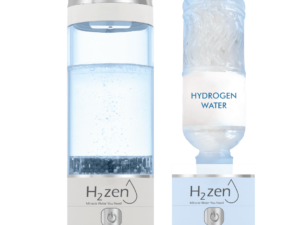
- Home generators/countertop units: steady supply and easy dosing.
- Magnesium-based tablets: portable, convenient for on-the-go use.
| Delivery | Freshness | Portability | Typical daily dose |
|---|---|---|---|
| Pre-packed pouches | High, short shelf life | High | 600 mL–2 L |
| Home generators | Stable if sealed | Low–Medium | 600 mL–2 L |
| Magnesium tablets | Best when used immediately | High | 600 mL–2 L |
Why researchers study this approach: excess reactive oxygen species disrupt cell balance, and small neutral gas molecules may modulate redox signaling without broad chemical changes. Human and animal studies report biological activity even at low concentrations.
Practical note: ingestion is easier to standardize than inhalation for daily use. Malaysians can choose portable bottles, countertop systems, or tablets to fit busy routines.
Wellness Group can explain device pros, maintenance, and budgets via WhatsApp at +60123822655 during business hours. Learn more about special considerations at hydrogen water while pregnant.
Understanding oxidative stress and inflammation in the body
When the body’s antioxidant shields fall short, reactive oxygen species can harm DNA, fats, and proteins.
How reactive oxygen species disrupt cellular homeostasis
Oxidative stress is the imbalance between ROS and the body’s defenses. This imbalance can produce markers such as 8‑OHdG, a common DNA damage signal measured in human studies.
Not all ROS are bad; low levels support normal signaling. The goal is to restore balance, not eliminate these molecules.
The oxidative stress-inflammation loop and NF-κB signaling
ROS activate redox-sensitive pathways like NF‑κB. That activation raises cytokines (IL‑1, IL‑6), which fuel inflammation and then produce more ROS.
- Real-world effects include fatigue, slower recovery, endothelial dysfunction, and metabolic changes.
- Research endpoints often include BAP, 8‑OHdG, and lipid peroxidation markers such as TBARS.
- Some studies report down-regulation of TLR–NF‑κB genes after intake of H2-rich solutions and related products.
Lifestyle—sleep, diet, and activity—also shapes redox tone. Those managing chronic disease should seek an integrated plan. Wellness Group consultants can explain pathways and local options via WhatsApp at +60123822655 or see hydrogen water options at hydrogen water options.
Hydrogen water for oxidative stress
Some dissolved gases may act as selective antioxidants, removing the strongest radicals while leaving normal signals intact. This selective action could lower cell injury without disrupting redox signaling.
Selective antioxidant action and anti-apoptotic effects
Selective scavenging targets highly reactive radicals and preserves signaling ROS that support repair and adaptation. That balance may protect cells and reduce programmed cell death.
What human studies showed about BAP, 8‑OHdG, and immune markers
In a randomized, double-blind study adults drank 1.5 L/day of hydrogen-rich water or plain water for four weeks. Overall BAP rose in both groups, but participants aged 30+ showed greater BAP gains with hydrogen-rich water.
| Endpoint | Finding | Implication |
|---|---|---|
| BAP (antioxidant capacity) | Greater rise in ≥30 yr subgroup | Improved systemic antioxidant potential |
| PBMC apoptosis | Reduced with hydrogen-rich water | Fewer immune cells undergoing death |
| CD14+ monocytes | Decreased after intake | Lower pro-inflammatory monocyte presence |
| PBMC transcriptome | Down-regulation of TLR–NF‑κB, IL1B, IL8 | Broad anti-inflammatory shift |
Group-level results vary by person. Combine this approach with sleep, diet, and activity to manage oxidative stress. Wellness Group can help interpret BAP or 8‑OHdG and set a trackable plan via WhatsApp at +60123822655.
The science at a glance: clinical trials, pilot studies, and placebo-controlled data
Randomized human trials offer the clearest window into whether short-term intake changes measurable biology.
Highlights from randomized, double-blind studies
Placebo-controlled study results show higher antioxidant potential (BAP) in older adults and reduced PBMC apoptosis. Cardiometabolic trials reported near 8% rises in HDL cholesterol and improved hdl function.
Transcriptional signatures: down-regulating NF‑κB networks
Transcriptome analyses reveal coordinated down-regulation of TLR–NF‑κB genes. That shift aligns with lower CD14+ monocyte counts and reduced inflammatory cytokines.
Key biomarkers: HDL function, TBARS, SOD, cytokines
Across clinical trials and pilot study reports, common endpoints include BAP, 8‑OHdG, urinary TBARS (-43%), SOD (+39%), HDL function, and cytokine panels.
“Endothelial response improved by ~25% (RHI) after two weeks in one randomized trial.”
Most trials used 600 mL to >1.5 L per day for 2–10 weeks. Sample sizes are often small, so larger clinical trials will strengthen confidence.
Wellness Group can share summaries of human data and practical dosing plans during consultations. WhatsApp +60123822655.
Exercise and performance: what studies in athletes and active adults showed
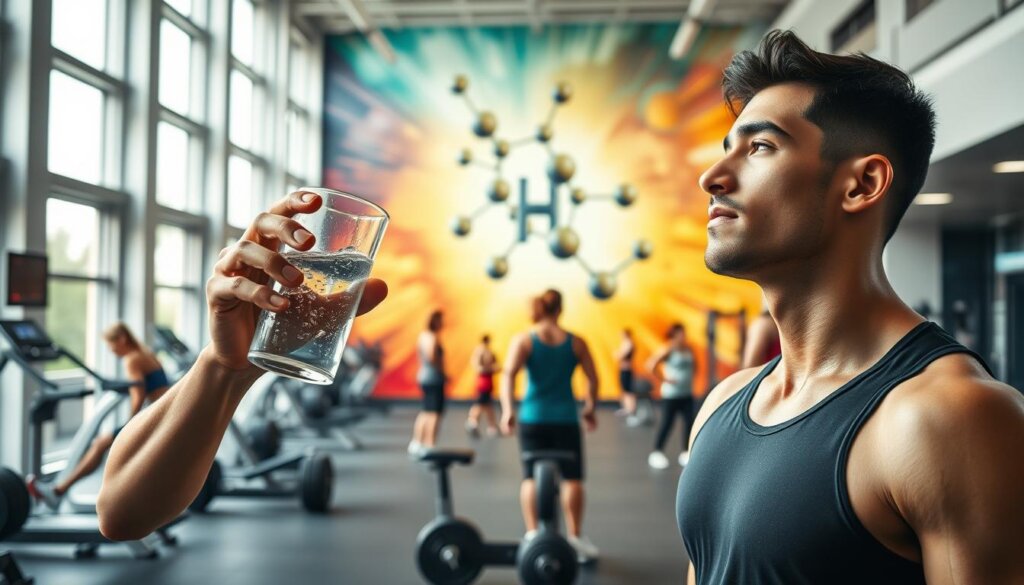
Athletes and active adults often test small interventions to shave seconds off performance and speed recovery. Trials in cyclists, runners, and youth players explored whether a brief pre-load influences fatigue, lactate, and breathing efficiency.
Fatigue, lactic acid, and ventilatory efficiency
Key finding: pre-session intake lowered blood lactate at higher intensities and improved ventilatory efficiency in some trials. Reduced lactate can ease perceived fatigue and speed recovery between sprints.
Mixed findings: where results were unclear
A 7-day nano-bubble regimen boosted anaerobic power in trained cyclists in one study. In a double-blind crossover, 1.68 L before a race improved time by ~1.3% in slower runners but showed unclear gains in faster participants. Responses varied by fitness level and pacing.
Practical timing: pre-workout and per-day strategies
- Try 300–600 mL 15–30 minutes pre-session, with remaining intake spread across the day.
- Pair with carbs and electrolytes to protect digestion and energy.
- Monitor pace, heart rate, and perceived fatigue over 2–4 weeks to judge effects.
Youth data: two-month intake in soccer players lowered MDA and TNF‑α while raising SOD and total antioxidant capacity.
Local note: athletes in Malaysia can request tailored pre-workout timing via WhatsApp at +60123822655 from Wellness Group.
Cardiometabolic health: lipids, glucose, and metabolic syndrome
Small randomized trials show promising shifts in HDL metrics and glucose control among at-risk patients. In studies lasting 8–10 weeks, researchers measured changes in cholesterol, triglycerides, and glycemic markers.
HDL, LDL, apoB, and triglyceride trends
HDL levels rose by about 8% in several reports, with improved hdl function noted alongside increased antioxidant enzymes like SOD (+39%).
Total cholesterol and LDL‑C trended lower, and apoB changes suggested reduced atherogenic particle burden. Smokers showed the clearest triglyceride drops, but wider replication is needed.
Metabolic syndrome outcomes and glucose
In a randomized trial of metabolic syndrome, high-concentration hydrogen-rich water improved fasting glucose, HbA1c, BMI, waist-to-hip ratio, and inflammatory markers. Endothelial function (RHI) improved after two weeks in one controlled study.
- Connects redox modulation to lower lipid peroxidation (TBARS -43%) and better HDL performance.
- Suggests LDL‑C and apoB reductions may reduce cardiovascular risk, pending larger trials.
- Shows glycemic improvements in patients with metabolic syndrome when combined with standard care.
Practical note: this approach complements diet, exercise, sleep, and meds. Patients on lipid- or glucose-lowering drugs should consult their clinician and obtain baseline labs with follow-up at 8–12 weeks.
| Parameter | Reported change | Typical duration |
|---|---|---|
| HDL cholesterol / function | ≈+8% / improved | 8–10 weeks |
| TBARS / SOD | -43% / +39% | 8–10 weeks |
| Glucose / HbA1c | Lowered in syndrome trial | 8–10 weeks |
Wellness Group can help plan hydrogen-rich water routines that complement lipid and glucose strategies. Contact via WhatsApp at +60123822655 for device and dosing guidance tailored to Malaysia.
Immune modulation and inflammation
Changes in CD14+ monocytes and PBMC gene patterns offer a clear window into immune shifts after a short regimen of hydrogen-rich water.
CD14+ monocytes, PBMC apoptosis, and cytokine shifts
A four-week intake of 1.5 L/day reduced PBMC apoptosis and lowered CD14+ monocyte frequency in a controlled study. Reduced apoptosis implies fewer dying immune cells and a lower cellular stress burden.
Fewer CD14+ cells may mean less recruitment of pro-inflammatory cells into tissues. That change aligns with transcript-level drops in key cytokine messages.
Toll‑like receptors, NF‑κB, and downstream gene expression
Transcriptome analysis showed lower expression of many TLRs (1/2/4/6/7/8/9), MYD88, and NFKB1. Downstream genes such as FOS and RELB also fell.
Practical meaning: the TLR–NF‑κB down-regulation suggests a quieter innate immune activation state without evident immune suppression in healthy adults.
What to track: simple wellness signs (sleep, soreness, recovery) pair well with optional labs like full blood count, inflammatory panels, or PBMC markers if available.
| Measure | Observed change | Clinical note |
|---|---|---|
| PBMC apoptosis | Decreased | Lower cellular stress burden |
| CD14+ monocytes | Lower frequency | Reduced inflammatory recruitment signal |
| TLR / NFKB transcripts | Down-regulated | Quieter innate activation |
| Cytokine transcripts (IL1B, IL8) | Reduced | Aligns with anti-inflammatory shift |
These signals are promising but preliminary. Those with chronic inflammation should consult their clinician before starting any new routine. Wellness Group can discuss feasible at-home trends and lab coordination via WhatsApp at +60123822655.
Mental well-being and quality of life
Mood and day-to-day energy often reflect subtle shifts in brain inflammation and autonomic balance.
Clinical signals: a double-blind, placebo-controlled crossover study (n=26) gave 600 mL/day hydrogen water for four weeks and found lowered K6 mood/anxiety scores. Resting sympathetic LF power also fell, and participants showed faster motivational responses after the regimen.
What this means: reduced LF often signals lower sympathetic drive at rest. That autonomic shift can ease anxiety and help focus during daily activity.
In a separate trial of women with panic disorder, 1.5 L/day intake for three months lowered pro‑inflammatory cytokines (IL‑6, IL‑1β, IL‑12, TNF‑α) even though primary psychological outcomes did not differ significantly. This biological change is worth exploring further.
Effects were modest and should be seen as supportive, not as replacements for therapy or medication. Those on psychiatric drugs must consult their clinician before adding hydrogen water.
Practical trial: try a 4‑week self-test at 600 mL/day, keep a short journal on mood, sleep, and energy, and track any changes in focus or activity levels.
“Small autonomic and cytokine shifts may translate into clearer day-to-day gains in mood and cognitive responsiveness.”
Wellness Group in Malaysia can help design a simple trial and advise on devices to keep intake consistent. WhatsApp +60123822655 for setup and guidance.
Liver and kidney insights: hepatitis B, NAFLD, and dialysis
Small clinical reports suggest meaningful lab and symptom changes in people with long-term liver or kidney disease.
Liver markers and viral load context
Patients with chronic hepatitis B who consumed 1200–1800 mL/day of hydrogen-rich water showed improved liver enzyme trends and lower HBV DNA levels in an open study.
Serum aminotransferases and other blood markers moved toward healthier ranges alongside reduced markers of cellular damage in several participants.
NAFLD and early trial signals
Exploratory data in NAFLD are encouraging, with randomized designs underway to test effects on liver fat and inflammation pathways.
Dialysis fatigue and electrolyzed solutions
In hemodialysis cohorts, electrolyzed hydrogen-rich water improved BUN, lowered oxidative load, and reduced patient-reported fatigue on dialysis and non-dialysis days.
- Medical supervision: dosing and monitoring must be supervised in chronic disease.
- Align administration with medication schedules and dialysis timing to avoid fluid conflicts.
- Fluid-restricted patients should coordinate intake volumes with care teams.
| Setting | Reported change | Clinical note |
|---|---|---|
| Hepatitis B | ↓ HBV DNA, improved enzymes | 1200–1800 mL/day reported |
| NAFLD | Preliminary improvement | Randomized trials pending |
| Hemodialysis | ↓ BUN, less fatigue | Electrolyzed solutions during sessions |
Wellness Group can provide clinician-ready product details and device options and coordinate safe plans in Malaysia. Contact via WhatsApp +60123822655.
Oncology context: emerging adjunctive research
Bodies of lab work and early reviews suggest a cautious, supportive role when an adjunct is paired with standard cancer therapy.

Colorectal models and combined 5‑FU approaches
Preclinical data show that adding a hydrogen-rich supplement to 5‑fluorouracil reduced tumor size, lowered fibrosis, and cut collagen deposition in colorectal models.
A systematic review that screened 677 articles and included 27 studies reported signals of improved tumor-related outcomes, better treatment tolerance, and quality of life in some reports.
- Framing: this approach is an adjunct for symptom support and tolerance, not a cure.
- Proposed mechanisms include redox modulation, lower inflammation, and tissue protection.
- Human evidence remains limited; rigorous clinical validation is still needed.
Practical advice: patients must coordinate closely with oncology teams to avoid interactions and to track side effects and hydration during treatment.
“Adjunct use may ease symptoms and improve tolerance, but trials in humans are preliminary.”
Wellness Group offers device guidance only and can assist caregivers in Malaysia via WhatsApp at +60123822655.
COVID-19 context: what early evidence suggests
Clinical teams tested adjunctive approaches that target the inflammatory surge seen in respiratory disease. Early interventions aimed to blunt cytokine cascades and ease breathing mechanics in mild-to-moderate cases.
Antioxidant and anti-inflammatory mechanisms under investigation
Why researchers explored this route: severe illness often features high reactive signaling and airway resistance, so they tested whether targeted redox modulation could reduce harm and aid recovery.
Early signals in one small study showed reduced cytokine activity and lower inhalation resistance. Most clinical reports used inhalation delivery, so the role of hydrogen water remains investigational.
Key cautions: these findings are preliminary. They do not replace vaccination, antivirals, or supportive care. Patients should consult a physician before trying adjunctive measures.
- Mechanistic rationale: calmer immune signaling may help tissue recovery.
- Clinical signals: improved breathing and reduced inflammatory markers in limited settings.
- Evidence gap: controlled trials specific to hydrogen water are needed; existing data often cite inhalation studies (doi, doi).
“Those considering consumer devices should view them as supportive tools and seek medical guidance.”
Wellness Group can advise on safe consumer devices in Malaysia but not provide medical management. WhatsApp +60123822655.
How to use hydrogen-rich water daily
Simple timing and modest doses let people test effects without disrupting habits. A short, study-aligned plan helps assess benefits and any digestive or energy changes.
Per-day intake ranges studied and age considerations
Intake ranges: human trials commonly used 600 mL to about 2 L per day. Many participants began at 600 mL/day and increased toward 1.5 L/day when tolerated.
Age note: adults aged 30 and older often showed clearer antioxidant and function gains in trials.
Integrating with physical activity and meals
Use one serving in the morning, a pre-workout dose of 300–600 mL, and another with meals to maintain steady administration across the day.
In Malaysia’s warm climate, balance total fluid targets to avoid overhydration. Pair intake with antioxidant-rich meals—do not replace whole foods.
- Start at 600–900 mL/day; scale slowly to 1.5 L if well tolerated.
- Consume soon after opening or generation; avoid shaking or venting to keep freshness.
- Try a 4–8 week self-trial and track energy, recovery, sleep, and digestion.
“Begin modestly, follow a simple schedule, and record outcomes before making changes.”
| Goal | Typical intake | Timing tip |
|---|---|---|
| General wellness | 600–900 mL/day | Morning + meals |
| Exercise support | 1.0–1.5 L/day | 300–600 mL pre-workout |
| Metabolic trials | 1.5–2.0 L/day | Spread across the day |
Personalized plan: For a tailored daily administration schedule and device advice, contact Wellness Group on WhatsApp: +60123822655 (Mon–Fri 9:30 am–6:30 pm; Sat–Sun 10 am–5 pm).
Choosing hydrogen water: generators, tablets, and quality signals
The choice of device shapes daily use, cost, and how much active gas reaches the body. Consumers should weigh portability, upkeep, and verified performance before buying.
Concentration, freshness, and packaging considerations
Concentration targets: lab and trial data typically report 0.8–1.6 ppm as common ranges. Freshly made servings retain the highest levels; degassing lowers content rapidly with exposure and heat.
Packaging matters: aluminum pouches and low-permeability bottles preserve levels longer than ordinary plastic. Several trials used sealed aluminum pouches that kept 0.8–1.2 ppm H2.
- Device types: PEM electrolysis generators, magnesium-based tablets, and pre-filled pouches each fit different needs.
- Active agent: the primary therapeutic component in electrolyzed-reduced products appears to be the dissolved gas, not alkaline pH.
- Maintenance: factor in filter swaps, cleaning schedules, and maker reliability when comparing models.
- Portability: commuters and athletes often prefer tablets or sealed bottles; home units suit steady daily routines.
- Verification: check third-party testing, clear specs, and local customer support before purchase.
| Option | Typical ppm retained | Best use |
|---|---|---|
| Pre-filled aluminum pouches | 0.8–1.2 ppm | Travel, single-use freshness |
| Magnesium tablets | Variable at intake | On-the-go convenience |
| Home generators (PEM) | 0.8–1.6 ppm fresh | Daily household supply |
Try a short sampling routine before investing in a high-end unit. Wellness Group can demo devices, compare options, and match a plan to budget and lifestyle. Contact them via WhatsApp at +60123822655 during business hours.
Safety, who should consult, and how to read study data
Before trying any novel routine, people should weigh likely benefits against known risks. Overall, this approach has been generally recognized as safe as a food additive and was well tolerated in human trials at typical study volumes.
Who should seek medical advice
Patients who are pregnant, have chronic kidney or liver disease, active oncology care, or major cardiovascular or metabolic disease should consult their clinician first. Those taking glucose- or lipid-lowering meds should monitor labs while testing any new regimen.
How to read common endpoints
Serum BAP rising suggests higher antioxidant capacity. Urinary TBARS and 8‑OHdG falling indicate lower lipid and DNA damage signals. Changes in blood immune phenotypes (eg, CD14+ counts) reflect cell recruitment shifts.
PBMC transcriptome shifts show coordinated drops in pro‑inflammatory pathways and may signal a quieter systemic inflammatory tone. Yet, transcript changes are hypothesis-generating and need larger trials to confirm clinical benefit.
| Measure | Typical direction | Clinical meaning |
|---|---|---|
| Serum BAP | Increase | Greater antioxidant potential |
| Urinary TBARS | Decrease | Lower lipid peroxidation |
| 8‑OHdG (urine) | Decrease | Less DNA oxidative damage signal |
| PBMC transcripts | Down-regulation | Reduced inflammatory gene activity |
“Pilot studies suggest safety and biological signals, but RCTs with larger participant groups offer stronger evidence.”
Wellness Group offers non-diagnostic education and device guidance in Malaysia. Patients may request advice via WhatsApp: +60123822655.
Wellness Group in Malaysia: start your hydrogen water plan today
Start simple: a brief consult with Wellness Group helps map a realistic plan around daily activity and family life. They translate trial doses (600 mL to ~1.5 L per day) into a schedule that fits morning routines, workouts, and meals.
Business hours and quick contact via WhatsApp
Contact is direct and fast via WhatsApp: +60123822655. Office hours are Mon–Fri 9:30 am–6:30 pm and Sat–Sun 10 am–5 pm. Participants may book short calls or demos during those times.
Personalized guidance on devices and routines
What they offer: side-by-side device comparisons, maintenance notes, warranty details, and local demos. The group explains how packaging and device choice influence concentration and freshness.
- Starter 4–8 week protocols with progress templates and simple tracking.
- Timing plans tied to daily activity and training sessions.
- After-sales support: filter reminders and periodic check-ins.
- Coordination with clinicians on request for those with medical needs.
“Bring any recent lab results to a consult so plans can be tailored precisely.”
Conclusion
The closing takeaway: a measured, practical trial can show if hydrogen-rich water helps with oxidative stress in daily life.
What studies suggest: human trials report higher antioxidant capacity, immune transcriptome shifts, and modest cardiometabolic and exercise benefits. These signals are promising but remain preliminary.
Start with a short, consistent trial (4–8 weeks), record simple outcomes like energy, recovery, and sleep, and use reliable devices to keep concentration and freshness high.
Special note: people with chronic conditions or on meds should seek medical advice before beginning. For personalized plans, device choices, or a demo, message Wellness Group at +60123822655 (Mon–Fri 9:30 am–6:30 pm; Sat–Sun 10 am–5 pm).
Balanced optimism is wise: the article highlights useful effects and real unanswered questions. This approach can complement lifestyle and medical care while larger trials refine the evidence base.
FAQ
What is hydrogen-rich water and how does it differ from plain drinking water?
It is regular drinking water infused with molecular hydrogen gas, which is small and highly soluble. Unlike plain water, it delivers dissolved H2 that can diffuse rapidly into cells and tissues. Devices, tablets, and electrolyzed generators produce varying concentrations, and freshness and packaging affect how much dissolved gas reaches the body.
How might molecular hydrogen affect reactive oxygen species and antioxidant systems?
Molecular hydrogen appears to act as a selective antioxidant, neutralizing harmful reactive oxygen species while sparing beneficial signaling molecules. Studies report effects on biomarkers such as BAP, 8‑OHdG, TBARS, and SOD, and changes in transcriptional networks tied to NF‑κB, suggesting reduced oxidative damage and lower apoptotic signaling in some populations.
What clinical evidence supports benefits for metabolic syndrome and cardiometabolic health?
Randomized and pilot studies have examined HDL function, LDL-C, apoB, triglycerides, fasting glucose, and insulin resistance. Some trials showed improved HDL function and reduced markers of inflammation; others reported modest changes in lipids or no clear effect. Results vary by dose, duration, and participant health status.
Are there placebo-controlled or double-blind studies on performance and recovery?
Yes. Several randomized, double-blind trials in athletes and active adults evaluated fatigue, lactic acid, ventilatory efficiency, and recovery. Some studies found reduced perceived fatigue and better ventilatory parameters, while others reported mixed outcomes. Timing (pre-workout vs daily intake) influenced results.
What dosing ranges and daily intake were used in trials?
Clinical studies used a range of per-day intakes, from a single pre-exercise bolus to multiple liters or repeated doses across the day. Concentrations varied by production method; many trials monitored hydrogen concentration, administration timing, and participant age to guide protocols. Personalized plans often consider activity level and metabolic status.
How quickly are molecular hydrogen effects seen in biomarkers and gene expression?
Some biochemical markers (like oxidative damage markers and cytokines) changed within days to weeks in pilot and clinical trials. Transcriptome analyses reported down‑regulation of NF‑κB–related networks and shifts in immune gene expression following short-term administration, though sustained effects depend on continued intake and study design.
Can it modulate immune function and inflammation?
Trials reported changes in immune cell behavior—such as CD14+ monocytes and PBMC apoptosis—and shifts in cytokine profiles. Mechanistic data point to modulation of toll‑like receptor signaling and NF‑κB pathways, which can reduce proinflammatory signaling in some patients.
Is there evidence for benefits in liver, kidney, or oncology contexts?
Preliminary studies explored liver markers in hepatitis B and NAFLD, dialysis-related fatigue and oxidative markers, and adjunctive models in colorectal cancer combined with chemotherapy agents like 5‑FU. Findings are encouraging but remain preliminary; larger controlled trials are necessary before clinical recommendations.
What about safety and who should consult a clinician first?
Most studies report good tolerability with few adverse events at studied doses. Individuals who are pregnant, breastfeeding, taking prescription medications, or with complex cardiometabolic or immune conditions should consult their healthcare provider. Clinicians may review serum, urine, and transcriptome endpoints when evaluating effects.
How should consumers choose a reliable generator, tablet, or packaged product?
Look for clear concentration data, rapid production or sealed packaging to preserve dissolved gas, proven freshness, and third‑party testing. Devices that allow measurement of dissolved molecular gas, and brands with transparent protocols and clinical backing, offer stronger quality signals.
Can it help mood, cognitive responsiveness, or autonomic balance?
Small studies linked intake to improvements in mood, anxiety measures, and autonomic markers such as LF/HF ratio. Cognitive responsiveness also showed positive trends in some trials, but results vary and larger studies are needed to confirm consistent benefits for mental well‑being.
How should it be integrated with exercise and daily routines?
Practical strategies include a pre‑exercise bolus for acute effects and maintenance doses across the day for chronic support. Timing, concentration, and total daily intake were tailored in studies to match activity level and age; personalized guidance helps optimize outcomes.
What biomarkers do researchers track to measure effects?
Common endpoints include HDL function, TBARS, SOD activity, BAP, 8‑OHdG, cytokine panels, lipid panels (LDL‑C, triglycerides, apoB), glucose and insulin markers, and transcriptional signatures related to NF‑κB and toll‑like receptor pathways.
Are there documented effects in COVID-19 or acute inflammatory conditions?
Early research explored antioxidant and anti‑inflammatory mechanisms in COVID‑19, with hypotheses around reduced cytokine-mediated damage. Results remain preliminary and under active investigation; larger controlled trials are required to define clinical utility.
Where can interested people get personalized advice or purchase devices in Malaysia?
Wellness clinics and specialized suppliers in Malaysia offer consultations, device selection, and guidance on routines. Business hours and quick contact options—often via WhatsApp—help users receive tailored recommendations based on assays and lifestyle.